
Design & Belonging: What a Street Can Teach Us About Community

As conversations in architecture increasingly focus on equity, accessibility, and inclusion, it’s worth examining the everyday spaces that shape how communities function. For me, one of those places is Stevens Avenue in Portland’s Deering Center neighborhood.
When my family moved here several years ago, one of my first outings was a walk on Stevens Avenue with my fourteen-month-old daughter to story time at Burbank Library. Over time, this street has served as a case study of how the built environment supports daily life.
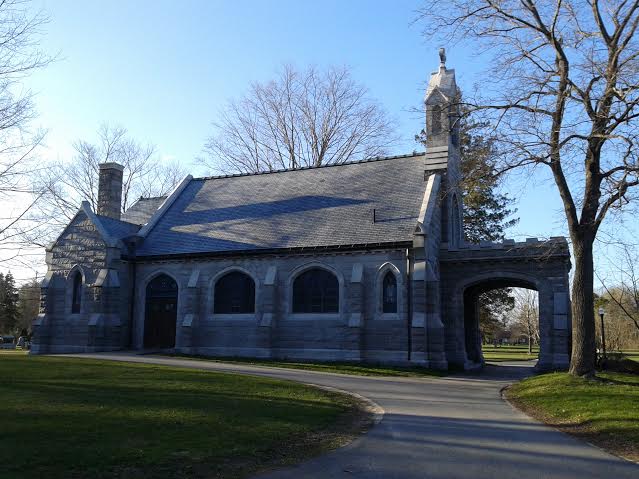
Named for Isaac Sawyer Stevens, who built his home along the road in 1767, the two-mile corridor offers a sense of continuity rarely found in modern cities. It is one of the only streets where you can go from preschool through college without leaving the street. On a typical morning, families gather outside Longfellow Elementary, then stop at Rambler Café for coffee. Pat’s Meat Market, established in 1917, remains a neighborhood mainstay for sandwiches or groceries. A few blocks away, the entrance to Evergreen Cemetery opens onto a historic landscape. Established by the city in 1854 and designed by Charles H. Howe, the cemetery features winding carriage paths, ponds, footbridges, gardens, a chapel, and funerary sculpture, modeled after Mount Auburn in Cambridge, Massachusetts, the nation’s first rural cemetery.
Great architecture and design are often found within the civic infrastructure of daily life: libraries, schools, cafés, parks, and neighborhood markets. When these places are accessible and connected, they support the informal interactions that make communities work.