
Design & the Natural World: How Maine's Landscape Shapes Architectural Thinking

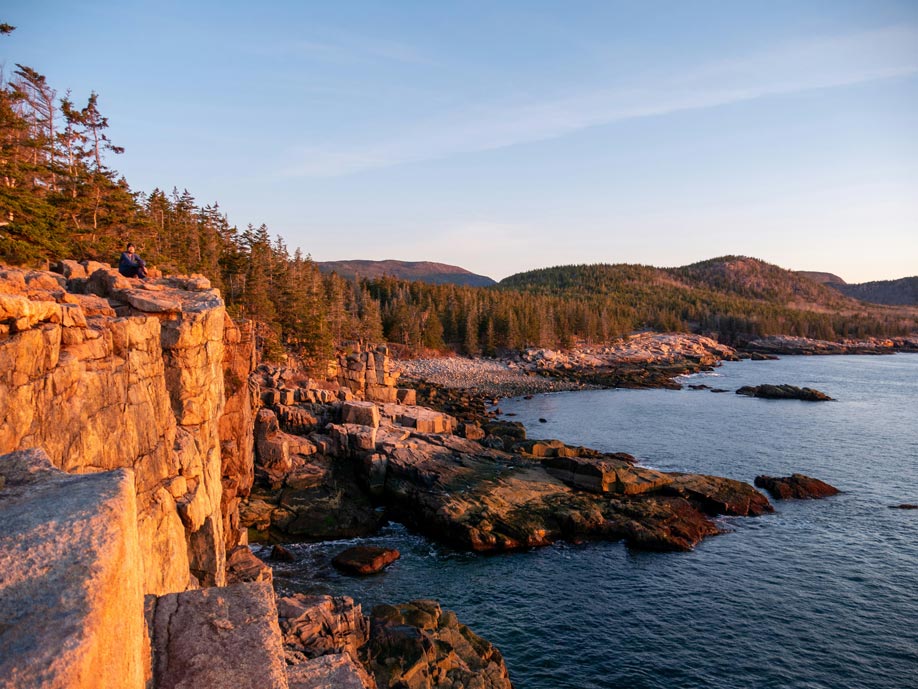
Maine has a way of making an architect humble.The landscape here is not a backdrop.
The granite ledge breaking through thin soil, the tide that rewrites the shoreline twice a day, the hemlock forests that hold their silence through February:these are collaborators with strong opinions about scale, material, and what belongs. The best architecture in Maine tends to reflect that negotiation honestly.
The Landscape as Design Brief
In most places, a site is something to be worked with or, more often, worked around. In Maine, the site has a way of insisting. Coastal zones bring salt air that corrodes and wind that scours.Inland forests demand that a building find its clearing or make sense of the tree line. Rural contexts ask a quieter question: how do you build something new that feels as settled as something old?
These are not stylistic constraints. They're ecological ones. And when designers respond to them genuinely, rather than imposing an aesthetic borrowed from elsewhere, what emerges tends to have a quality that's difficult to name but easy to feel: a sense of rightness, of arrival.
What the Coast Teaches
Maine's coastline stretches over 3,000 miles, longer than California's, and every mile of it is a study in impermanence. The shoreline shifts with storms, seasons, and decades of slow erosion.
Building here means accepting this. The buildings that work on the Maine coast tend to be modest in footprint and generous with their relationship to water and light. They sit back from the edge, because experience has taught that the edge moves. They use materials like cedar, stone, and weathering steel that acknowledge exposure rather than resist it. They orient themselves to the water not as a view to be framed and sold, but as a presence to be lived alongside. Good coastal architecture in Maine doesn't announce itself. It watches the water
What the Forest Asks
Inland, the challenge shifts from elemental exposure to proportion and light. How does a housesit in a tree line without disrupting it? How do you bring daylight into a building surrounded by a canopy that captures most of it first?
Maine's vernacular architecture, the cape, the saltbox, the connected barn, developed these answers over centuries of necessity. The forms are compact because heat is precious. Contemporary architects working in forest and rural landscapes are often in dialogue with this tradition, whether they acknowledge it or not. The best work doesn't mimic the vernacular but understands its logic: form following climate, material following what the land provides, a building earning its place by fitting rather than overriding.
Stewardship as Design Value
Running through all of this is an ethic of stewardship. Building in Maine is not a conquest of the landscape but a form of participation in it.
This instinct is older than the language of sustainability. It comes from the fact that Maine is a place where the natural world is not abstract. The forest is where you walk, where wood comes from, where water begins. The ocean is where food comes from, where weather arrives.Building well here has always meant building in relationship to those realities.
As climate change makes those realities more urgent, the design ethic Maine has long practiced becomes more broadly relevant. The question is no longer just what looks right on this landscape. Instead, it's how we do right by it.
A Different Kind of Ambition
Elsewhere, architecture often measures itself by height, spectacle, and novelty. Maine offers a different ambition: depth. The depth of a building that weathers honestly. The depth of a space that feels calibrated to its particular place.
The designers who do this work best share a quality that seems counterintuitive in a field that values vision: they are good at patience. They walk a site before they draw. They ask what is already there before deciding what to add. They accept that sometimes the best design decision is the one that leaves the most alone.
Maine's landscape has been teaching this lesson for a long time. The buildings worth remembering here are the ones that have embraced the lessons.